

Turn Reviews Into Posts: Your Customers Already Wrote Your Best Ads
Your best copywriter doesn't work for you.
She bought from you once, left a review you read exactly one time, and went on about her life. Meanwhile you're over here staring at a blank caption box like it owes you money, trying to sound "authentic" on purpose — which, let's be honest, is the least authentic thing a person can do.
Hey Mavens. Pull up a chair, because we're about to go read your reviews like they owe us money.
Here's the scene I want in your head. A customer — we'll call her a graduate of the school of hard knocks — is standing in her living room doing disaster math. Eight kids. Paint. Her carpet. She is, in her own word, TERRIFIED. And then she writes the sentence your next three posts and your next ad are hiding inside: "Eight kids, zero tears, and my carpet survived."
You cannot buy copy like that. You can only dig it out of the reviews you already have.
To turn reviews into posts, you feed your real customer reviews to an AI assistant like Claude and have it mine them — not rewrite them — for the exact phrases your buyers use, then build testimonial posts, story posts, and ad angles out of those words only. Nothing invented. Nothing polished into a lie. Your customers' language, doing the selling, because it's the same language your next customer is thinking in.
That's the whole game. Now let's play it properly.
Why Are Your Reviews Better Than Anything You'd Write?
Because strangers believe strangers in a way they will never believe your sales page. That's not cynicism, that's Tuesday.
You know too much about your own product. You know the specs, the features, the seventeen reasons it's great. Your customers know how it felt — and feelings are what people buy. When a nervous buyer reads "I was TERRIFIED of paint in my living room," she doesn't think nice ad. She thinks that's literally me. Your ad copy could never. It has a job to do and everybody can smell it.
So no, you don't need to get better at marketing. You need to start quoting the people who already bought.
This works even better when the AI already knows your business — your voice, your offers, how you talk — which is why my Lab members build their AI Business Brain before they touch a workflow like this one. Brain first. Then the magic tricks actually sound like you.
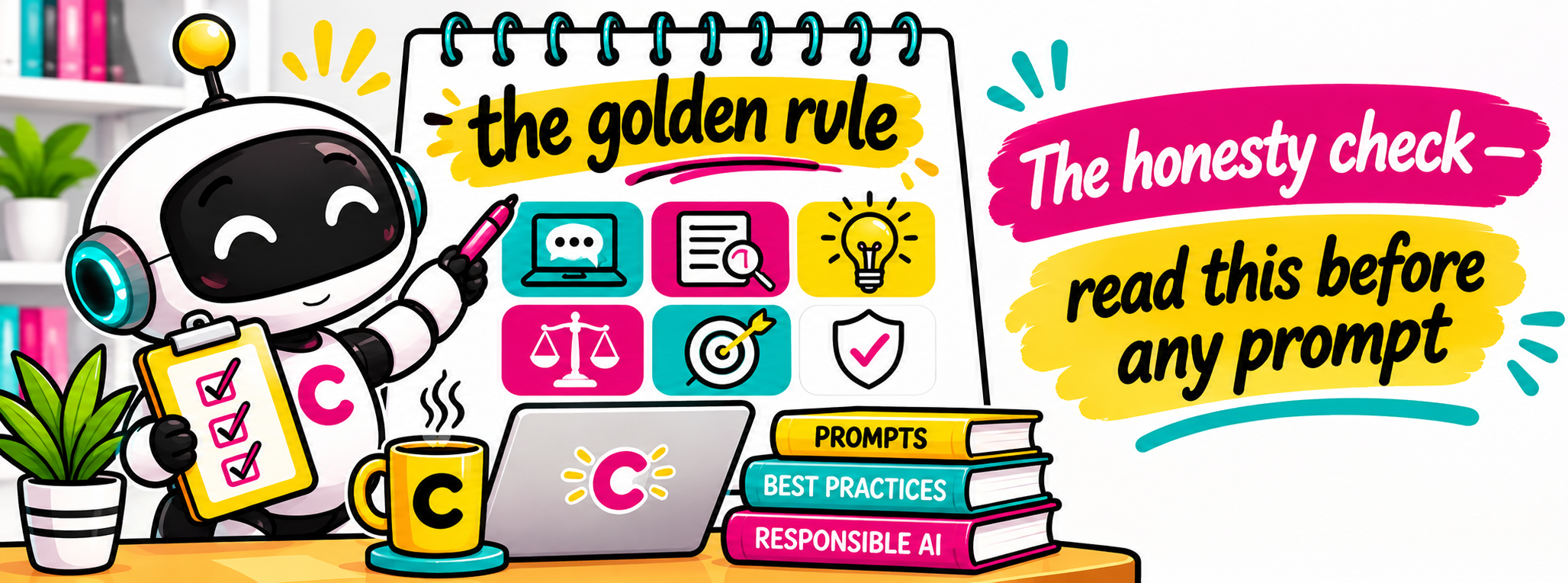
The Golden Rule: What Must You Never Do With a Review?
Read this before any prompt, and read it twice if money is about to leave your account.
Reviews only work because they're real. Bend one and you're not doing marketing anymore — you're doing fiction, and fiction gets found out, screenshotted, and shared for all the wrong reasons.
Never change a review's meaning. Trimming for length? Fine. Fixing a typo? Fine. Turning "good" into "life-changing," or quietly cutting the "shipping was slow, BUT…" so only the praise survives? That's editing the truth, and it stops here.
Never invent reviews. Ask an AI tool for marketing help and it will happily write you a five-star review from a customer who does not exist — name, hometown, and a touching backstory included. That is not a shortcut. That is fraud with better grammar.
Names and photos need permission. Quoting a public review's words is the normal, expected use where they posted it. A screenshot with a full name, a photo of somebody's kids, a kind DM? Ask first. "Can I share this?" takes ten seconds, and people almost always say yes.
Pin those three to the wall. Every prompt below is built to keep you inside them — the fences are in the wording on purpose.
What Do You Need Before You Start?
Ten minutes of gathering, and you're dangerous:
Your AI Business Brain, loaded or pasted at the top of the chat. Not optional — it's how the posts sound like you instead of an ad agency.
8–15 real reviews, full text, for ONE product or service. Etsy, Google, your shop, the screenshots in your phone. Copy the words exactly. Mixed reviews about everything gives you mush.
The star rating and source for each — 5 stars on Google, 4 on Etsy. You'll caption honestly later.
The offer this content points at — product page, booking link, waitlist. Every post ends somewhere. Decide where before you start.
Your no-list — words you may NOT use. Claims you can't back up, "best" anything, guaranteed results. Hand the tool your fences up front and it stops trying to climb them.
Prompt 1: How Do You Mine Your Reviews for Gold?
Paste your reviews under this prompt:
You are my marketing researcher, working from my AI Business Brain above. Below are real reviews from my real customers for [PRODUCT / SERVICE]. Your job is to mine them — not rewrite them.
Rules: quote my customers word-for-word, never paraphrase a quote. Do not invent customers, details, results, or praise that isn't in the text. If a point is supported by only one review, say so — I need to know what's a pattern and what's a one-off.
[PASTE YOUR 8–15 REVIEWS, EACH WITH ITS STAR RATING AND WHERE IT CAME FROM]
Now give me, in order:
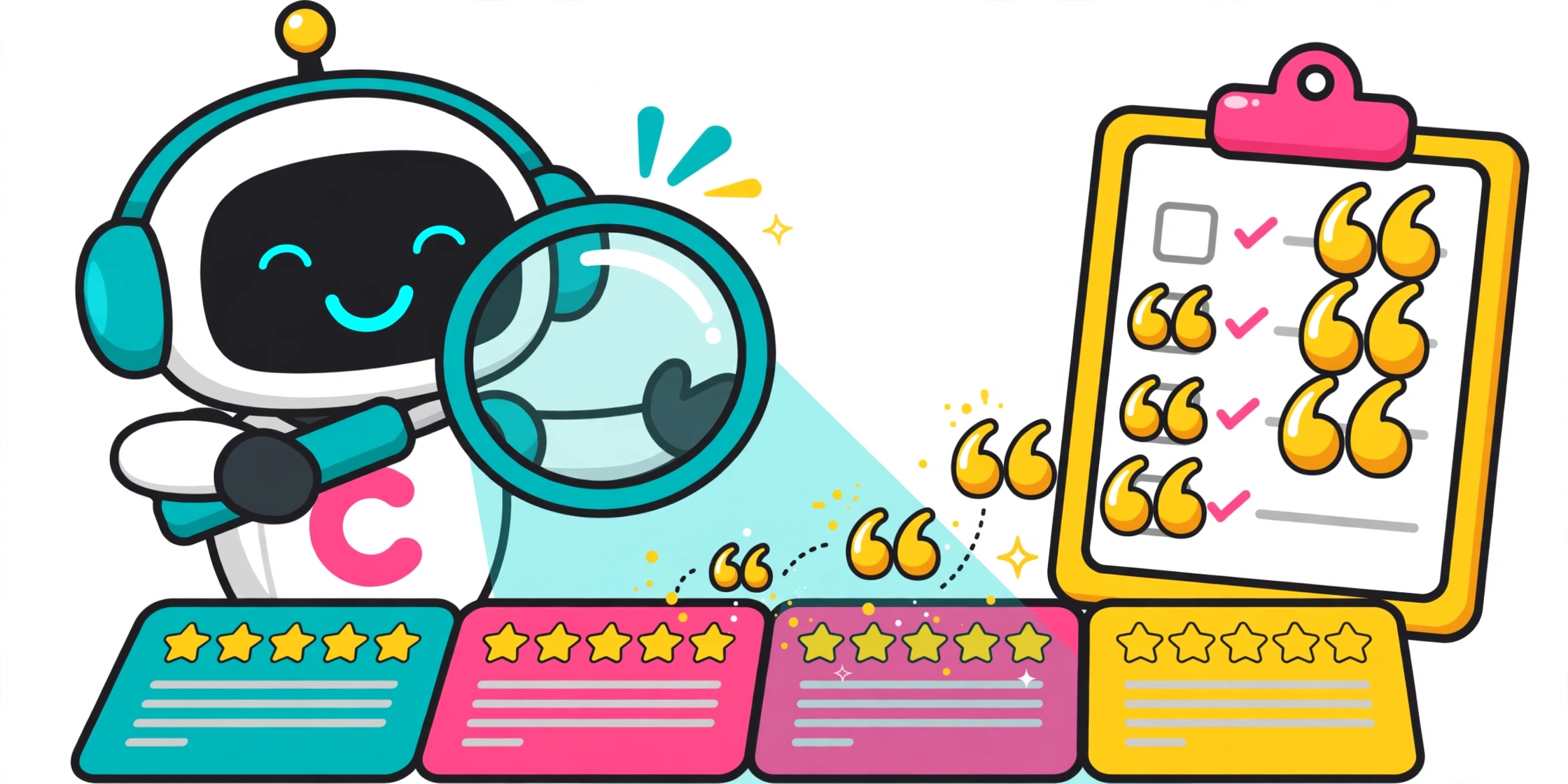
1. The exact-phrase list. The words and phrases customers use again and again, quoted exactly as written. Group them by what they're really praising (quality, ease, speed, how it made them feel). These phrases are the whole point — do not polish them.
2. My top 3 selling points. Ranked by how many reviews mention them AND how strongly they're worded. For each one: state the selling point, then give me the 2 strongest customer quotes that prove it, word-for-word.
3. Before and after. In my customers' own words: how they felt BEFORE (the worry, the problem) and AFTER (the relief, the result). Quote both sides.
4. The "I almost didn't" list. Every place a customer mentions hesitating, worrying, or doubting before buying — and what won them over. Quote those lines exactly. These become my FAQ posts.
Read the output like a detective, not a fan. You're not looking for compliments — you're looking for patterns. One customer saying a thing is a cute anecdote. Five customers saying it in the same words? That's your headline, pre-written by the market.
Prompt 2: How Does One Review Become 3 Posts?
Pick your strongest, most specific review — the one with a real moment in it, not "great product!!" with two exclamation points doing cardio — and run this:
Working from my AI Business Brain and the review below, write me 3 posts for [PLATFORM]. Write in my voice. The review is true and must stay true: any words inside quotation marks must appear word-for-word in the original review. Do not add results, details, or feelings the customer didn't state. If you need a fact you don't have, leave a [PLACEHOLDER].
The review: [PASTE THE REVIEW + STAR RATING + SOURCE]
These posts point to: [YOUR OFFER / LINK]
Words I may not use: [YOUR NO-LIST, OR "NONE"]
Post 1 — The testimonial post. The review front and center. My 2-sentence introduction on top (why this one matters to me), the quote itself lightly trimmed ONLY if it's long — meaning unchanged — then a 1-sentence close and one call to action.
Post 2 — The story post. Retell this customer's moment as a short story, in my voice: where they started, what they were worried about, what happened. Use only facts from the review. End with one exact line from the review in quotation marks. One call to action.
Post 3 — The FAQ-busting post. Find the worry behind this review — what almost stopped this customer, or the question they clearly had before buying. Write the post as my answer to that worry, for the next customer who has it, using the review as proof. One call to action.
Three posts, three jobs: one proves it, one makes people feel it, one talks the next hesitant buyer off the fence. Same review. A week of content. You're welcome.

Prompt 3: How Do You Turn a Review Into Ad Angles?
Same review — or the one Prompt 1 ranked highest — because now we're talking about money, and money is where honesty goes to get tested:
Working from my AI Business Brain and the review below, build me ad angles. Rules: quoted words must be exact. No claim may appear in this ad that isn't supported by this review or my Brain. Do not invent urgency, discounts, statistics, or results.
The review: [PASTE THE REVIEW + STAR RATING + SOURCE]
The offer and link: [OFFER] · Call to action: [E.G. "SHOP NOW" / "BOOK A CALL"]
Give me:
1. Three hook lines — the first line someone reads or hears. At least two of them must be built from the customer's exact phrases (mark which words are quoted).
2. Two primary text options — the body of the ad, 40–60 words each, testimonial-led: the customer's words do the convincing. One call to action at the end of each.
3. Three headline options — under 8 words each. Short, specific, no hype words the review doesn't back up.
4. The do-not-say list. Based on this review, list the claims I canNOT honestly make — the things a normal ad would promise that this proof doesn't cover. I want this list before I spend a dollar.
That fourth part is the one everybody skips and the one that matters most. Ad tools drift toward big promises like water runs downhill. The do-not-say list is your fence — build it before the money moves.
What Did It Actually Give Back? A Real Run
I don't teach recipes I haven't cooked. So on November 11, 2026, I ran this exact workflow live in Claude with our demo shop, Confetti Lane Co., and 11 reviews of their kids' paint party kit — the same live-run treatment I gave the AI product photography workflow, because around here we show receipts.
The mine came back rich. Biggest pattern: the mess. Four of the 11 reviews circled cleanup — "washable paint," "washed right off their hands," "washed off the kids, the table, and somehow my white shirt." And the phrase "Everything was in the box" appeared word-for-word in two different reviews. Claude called it the strongest repeat in the set, and Claude was right.
The posts held the line. The story post opens on the fear — paint, eight kids, a living room — and ends on the customer's exact words. It never claims it was a birthday party, because the review never said that. And the FAQ post produced my favorite sentence of the whole run: "That's one customer's living room, and I won't pretend it's a lab test." Baby, that's not AI being robotic. That's AI being honest — because the prompts made it be.
The do-not-say list earned its keep. From the carpet review alone, Claude refused to let me claim "mess-free" (the carpet survived — nobody said nothing got on it), "washes out of carpet" (never said), or "enough for eight kids" (eight kids were there; the review doesn't say one kit covered them — kit capacity stayed a [PLACEHOLDER]). One mention is an anecdote. A pattern is a promise you can make. Everything else is a fence.
What If It Comes Back Flat?
It happens. Here's the fix-it drawer — and if your prompts generally feel meh, my rules for how to get better answers from AI will save you a lot of sighing:
The posts sound like ads, not people. Reply: "Rewrite all 3 posts using ONLY phrases from the Prompt 1 exact-phrase list for the customer-facing claims. Cut every adjective that didn't come from an actual customer."
A quote got polished — or invented. Reply: "Check every line in quotation marks against the reviews I pasted. Each one must match word-for-word. Flag any that don't, replace them with exact quotes, and list what you changed." Then verify it with your own eyes. Trust, but zoom in.
All 3 posts feel the same. Reply: "These need three different jobs: Post 1 proves, Post 2 tells the story, Post 3 answers the worry. Rewrite so each opens differently and speaks to a different reader."
The ad angles overclaim. Reply: "Rebuild the angles so every claim is backed by at least 2 reviews. Anything backed by only one review moves to the do-not-say list."
Good to Know Before You Post
Keep a reviews folder. One running doc, or a note on your phone. Every new review, DM compliment, and kind email gets pasted in the day it arrives. Prompt 1 gets smarter every run — and "I have nothing to post" stops being a problem you have. (Same energy as keeping an AI prompt library: your best material, saved once, used forever.)
Screenshots build trust — typed text builds reach. A real screenshot looks un-staged, and people believe it. But type the review text into your caption too: screenshots can't be searched, and screen readers can't read them. The words are the whole point — accessibility is not extra, it's good business.
Ask, then share. The best reviews you'll ever get are hiding in your DMs, unposted because they were said in private. Ask permission, screenshot the yes with the compliment, and you've got your most believable post of the month.
This works across tools. Claude, ChatGPT — the prompts run as written. My ChatGPT vs Claude vs Perplexity breakdown will help you pick your fighter. And when you're ready to go further, you can package repeat workflows like this one as Claude Skills, turn the posts into video with my Claude video editor starter prompts, or let an AI voice assistant handle the follow-up. There are 100 tasks your AI assistant can do for your business — this is just the one that pays you back in your customers' own words.
Frequently Asked Questions
Can I edit a review to make it punchier?
Trim it for length, fix a typo — yes. Upgrade its meaning, cut the caveat, or move words around until it says something stronger? No. The moment a quote stops being exactly what the customer said, it stops being a review and starts being a liability.
What if I only have a few reviews?
Run it anyway, with what you have, and respect the fence: claims backed by one review stay small and specific. Then go earn more reviews — ask at the happy moment, right after delivery, when the love is loud.
Which tool is best for this — Claude or ChatGPT?
Both run these prompts well. Pick the one that already holds your Business Brain, so your voice and your reviews live in the same place. The fences in the prompts matter more than the platform.
Can I use a great DM compliment as a review?
Only with permission. A DM is private until the person says otherwise. Ask, screenshot the yes along with the compliment, and you're golden — that screenshot is your receipt.
Your Turn
☐ AI Business Brain built (or refreshed) and loaded
☐ 8–15 real reviews gathered for one product — words exact, stars + sources noted
☐ Permission confirmed for any name, photo, or DM I plan to use
☐ Prompt 1 run — phrase list and top 3 selling points checked against the actual reviews
☐ Prompt 2 run — 3 posts drafted, every quote verified word-for-word by my own eyes
☐ Prompt 3 run — ad angles built, no claim standing on a single review
☐ Prompt 3's do-not-say list saved where I'll see it before I post anything
☐ First post scheduled or live
Want to watch this done live, with a room full of business owners doing it alongside you? That's the Weekly Lab inside The AI Business Lab — and if you'd rather build your whole AI setup one-on-one, you can book a call and we'll map it together. For a weekly dose of practical AI like this in your inbox, join Between Us & the Bots.
Now go read your reviews like they owe you money. Because content-wise? They kinda do.
Practical AI for the real world. — Christiana
The AI Business Lab

Every week, one working AI skill. One hour. Every Wednesday at 6 PM ET, I pick one AI skill and teach it start to finish. You show up, build it with me, and leave with something you can use in your business the same day. Join live and it's free. Can't make it? Grab the replay inside the Lab.